Missing teeth can affect more than your smile. They may make chewing difficult, influence speech, and affect your confidence in everyday situations. At Amal Dental Solution, we help patients explore dental implant solutions designed to restore missing teeth and improve oral function and appearance.
Under the care of Dr. Ayushman Baruah, BDS – Dental Surgeon, we focus on understanding your dental concerns and guiding you through suitable tooth replacement options based on your oral health, individual needs, and treatment goals.
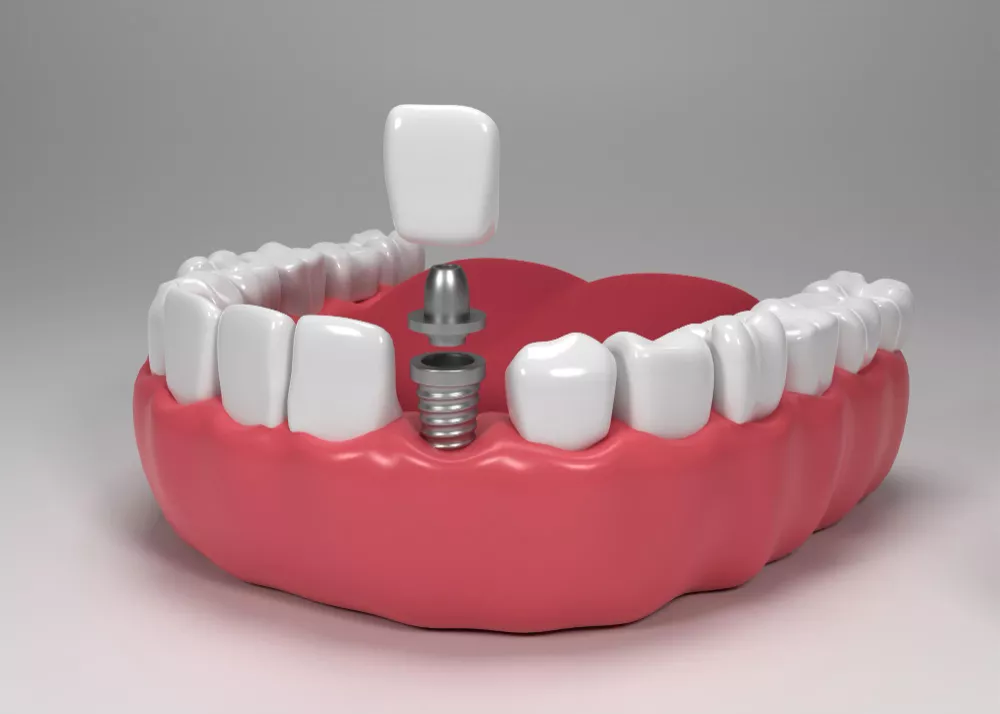
Dental implants are artificial tooth roots, typically made from biocompatible titanium, that are placed in the jawbone to support replacement teeth. Once integrated with the surrounding bone, an implant can support a dental crown, bridge, or other appropriate restoration.
Unlike conventional removable dentures, implant-supported restorations can provide a stable solution for replacing missing teeth. Dental implants can also help maintain jawbone structure by providing stimulation to the bone in the area of the missing tooth.
Dental implants may be considered if you have:
One or more missing teeth
Difficulty chewing because of missing teeth
Gaps that affect the appearance of your smile
Loose or uncomfortable removable dentures
A need for a stable alternative to certain traditional tooth replacement options
Your suitability for dental implants depends on factors such as jawbone volume, gum health, general health, and oral hygiene. A detailed dental examination and appropriate imaging are necessary before treatment planning.
1. Consultation and Assessment
Your dentist evaluates your oral health, examines the missing-tooth area, and determines whether dental implants may be suitable for you.
2. Personalized Treatment Planning
A treatment plan is developed based on your bone condition, the number of missing teeth, and the type of restoration required.
3. Implant Placement
The implant is placed in the jawbone through a dental surgical procedure performed by an appropriately qualified dental professional.
4. Healing and Integration
Over a period that varies from patient to patient, the implant integrates with the surrounding bone. Additional procedures may sometimes be necessary.
5. Placement of the Replacement Tooth
Once the implant is ready to support the restoration, a custom-made crown, bridge, or other suitable prosthesis is attached to complete the treatment.
When appropriately planned and maintained, dental implants can offer several benefits:
Natural-Looking Appearance: Replacement teeth are designed to complement your existing smile.
Improved Chewing Function: Stable restorations can help you eat more comfortably.
Support for Jawbone Health: Implants can help reduce bone loss in the area of a missing tooth.
Stability and Comfort: Implant-supported teeth do not rely on removable denture retention alone.
Long-Term Tooth Replacement: With proper care and regular dental reviews, implants can provide a durable tooth replacement option.
Maintaining good oral hygiene is essential for the long-term health of dental implants. Brush twice daily, clean carefully around the implant-supported restoration, and attend regular dental check-ups. Your dentist may recommend specific cleaning aids and follow-up visits according to your needs.
Although implants can be highly successful, they are not suitable for everyone and can develop complications. Healthy gums, appropriate treatment planning, and consistent maintenance are important for long-term outcomes.
At Amal Dental Solution, we understand the importance of a complete, comfortable, and confident smile. We help you understand your tooth replacement options and make informed decisions about your oral health through personalized guidance and careful treatment planning.
Whether you are missing a single tooth or exploring options for multiple missing teeth, a consultation can help determine the most appropriate approach for your situation.
Personalized dental care for a healthier, confident smile.